Red Light Therapy Pad vs. Belt vs. Wrap: Which Should You Buy?
Pad, belt or wrap? Compare how each format fits, powers and feels in daily use, using the real styles, prices and specifications of our portable wrap range.
Best for: moving between a few body areas, or starting with one focused area.
Check: how the pad is held in place, its size and how flexible it feels on a curved joint.
Remember: a pad only works as well as it stays where you put it.
Shop for a portable red light therapy device and you will see three words used almost interchangeably: pad, belt and wrap. They sound alike, but they describe different shapes, and the shape decides where the device sits, how well it stays put and how easy it is to use week after week.
This guide compares the three formats from a buyer's point of view. Everything we say about products comes from the specifications on our own listings: the Portable Red Light Therapy Wrap, which offers five styles from $149 to $399, and the Red Light Therapy Wrap With Power Bank at $199. Where a detail has not been confirmed, we say so instead of guessing.
Side-by-Side Analysis
Quick comparison of our five styles
Prices and specifications come from the product listings. Where a detail is not confirmed for a style, it says so.
Feature
USB pad
Rechargeable pad
Massage belt
240-LED / 360-LED pads
Price
$149
$199
$299
$349 / $399
Format
Flexible pad
Flexible pad
Massage belt
Light pads
LEDs
Not listed
Not listed
153
240 / 360
Power
USB power; confirm included accessories
Rechargeable; power bank included
Confirm for this style
Confirm for these styles
Listed wavelengths
660 nm red and 850 nm near-infrared, listed for the product range; confirm for your style
660 nm red and 850 nm near-infrared, listed for the product range; confirm for your style
660 nm red and 850 nm near-infrared, listed for the product range; confirm for your style
660 nm red and 850 nm near-infrared, listed for the product range; confirm for your style
Extras
Heating is listed for the range; confirm for this style
Heating is listed for the range; confirm for this style
Massage functions; confirm controls
Heating is listed for the range; confirm for these styles
Battery capacity, runtime and controller functions have not been independently confirmed for any style, so check the product page and the supplied instructions before ordering.
01
Pad, belt, wrap: what the words usually mean
A pad is a flexible light panel that you place against an area or hold in place. A belt is a strap-style device built to go around the body. A wrap is the broad, everyday term for a flexible device that you fasten around a part of the body, so pads and belts are often both sold as wraps.
That overlap is why our catalog groups them. The Portable Red Light Therapy Wrap listing includes a USB pad, a rechargeable pad, a massage belt and two higher LED-count pads. Because they share one listing, the useful question is not which word is right, but which style suits where and how you will use it.
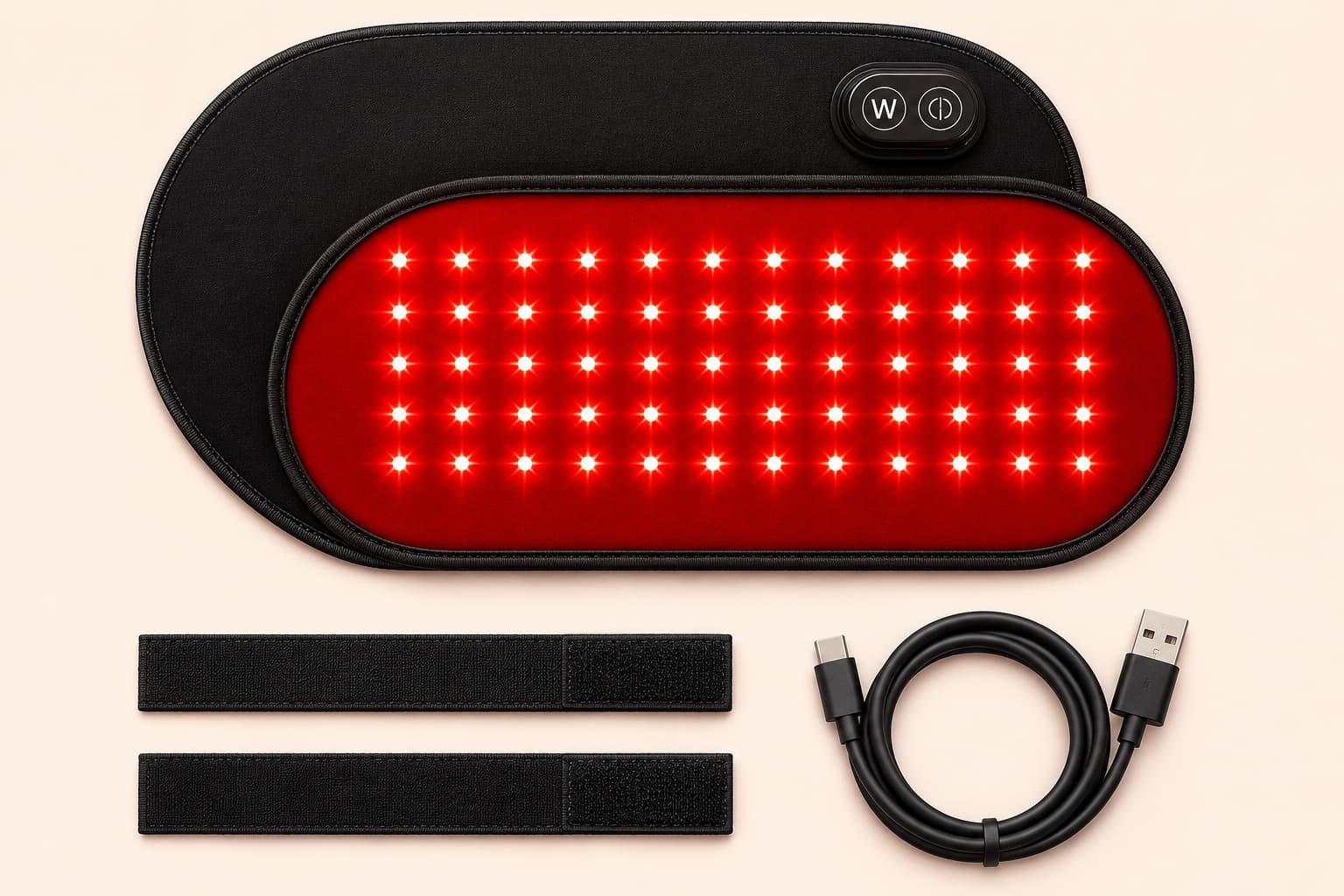
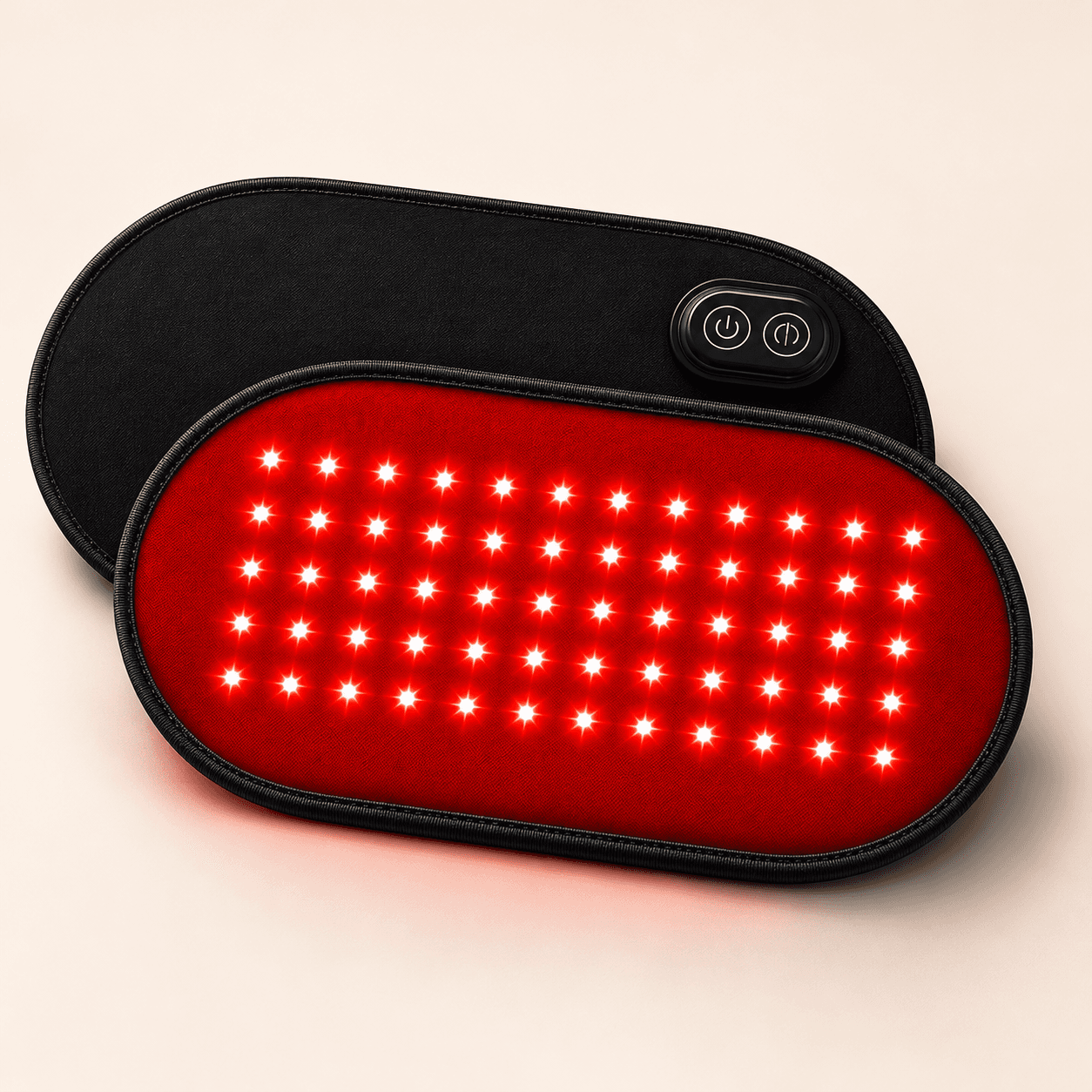
A flexible pad is the most adaptable starting point. You can position it on a knee, shoulder, elbow or the lower back, move it between areas and store it flat. That makes it a natural choice if you expect to use it on different areas rather than one fixed spot.
On our range the pad styles are the USB pad at $149, the rechargeable pad at $199, and the 240-LED and 360-LED pads at $349 and $399. The suppliers list the pads for targeted body areas, so confirm the fit and fastening on the style you choose.
Best for: moving between a few body areas, or starting with one focused area.
Check: how the pad is held in place, its size and how flexible it feels on a curved joint.
Remember: a pad only works as well as it stays where you put it.
03
A belt suits you if you want it to stay put
A belt is built around fastening. If your focus is the waist or lower back, a strap that goes around the body can feel steadier than a pad you have to hold or tape in place, and it leaves your hands free.
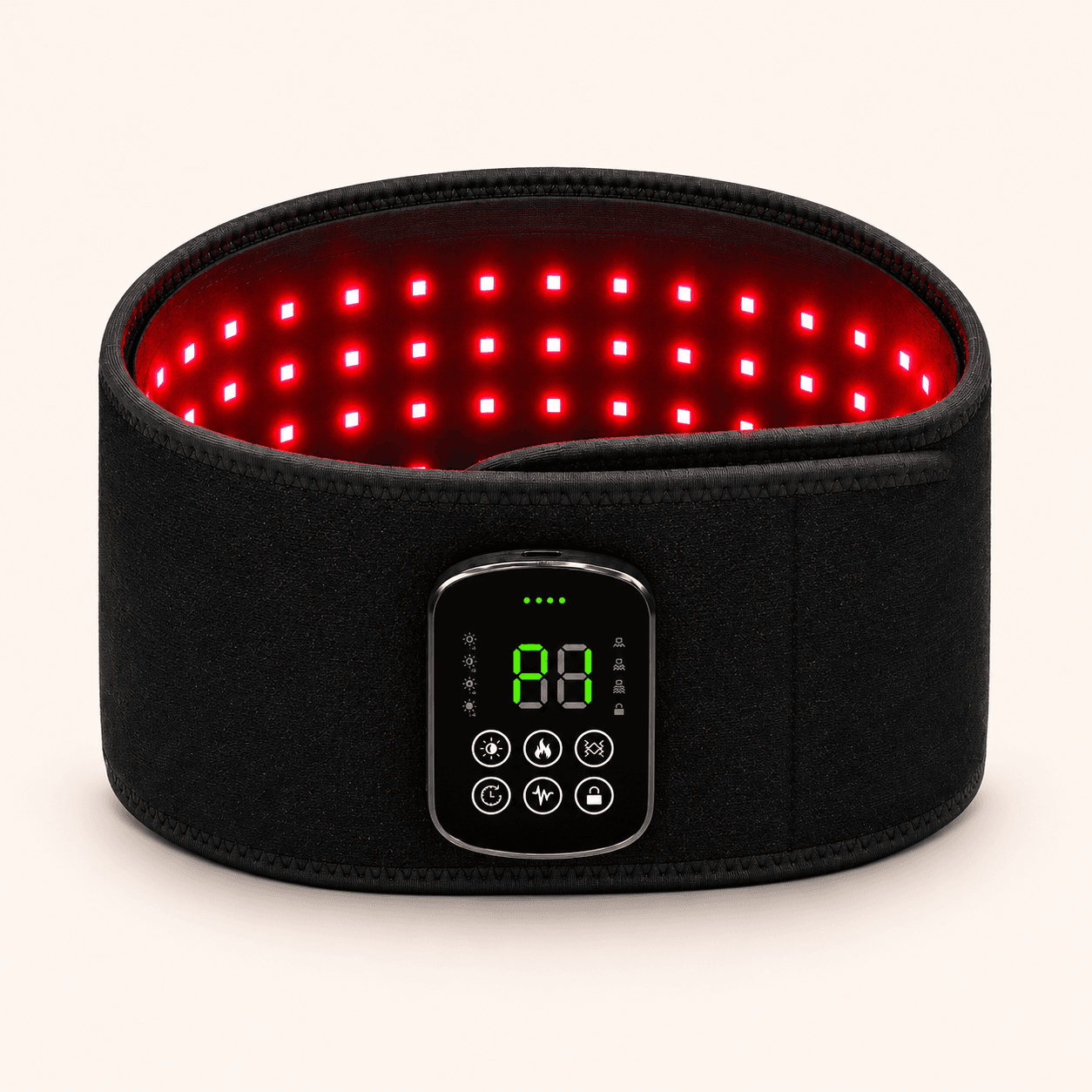
Our massage belt is listed at $299 with 153 LEDs. It is the one style listed with massage functions, and the exact controls and functions depend on the style, so read the controls and package contents for the model before you order. A belt is a more specific format, so it makes most sense when you already know the area you want to use it on.
Best for: hands-free use around the waist or lower back.
Check: strap length and adjustability, so it fits your body without pulling tight.
Remember: the massage function is a feature of the belt style, not of every style.
04
USB or rechargeable: where will you use it?
Power decides where you can use the device. The USB pad at $149 is listed as USB-powered, so it needs a USB power source nearby, and you should confirm which accessories are included in the package. The rechargeable pad at $199 includes a power bank, which lets you sit wherever is comfortable without staying next to a wall outlet.
The rechargeable pad is the same style as the one on the separate Red Light Therapy Wrap With Power Bank page, also $199 with the power bank included. Its battery capacity and runtime have not been independently confirmed, so we do not quote hours of use. Treat the power bank as a convenience and follow the supplied instructions.
05
Do not choose on LED count alone
It is tempting to assume the 360-LED pad at $399 must beat the 153-LED belt or the pad at $149. A higher LED count can mean a larger or denser panel, but it does not tell you how much light reaches your skin, and it is not a promise of better results.
Compare the listed wavelengths, which the supplier gives as 660 nm red and 850 nm near-infrared for the product range (confirm for your style), then the panel size and the session guidance. Published reviews also note that there is still no agreement on the best parameters for light therapy, and that excessive doses have sometimes worked against results, so more is not automatically better.
Use your most likely routine to decide, then confirm the style details on the product page before ordering.
You want one flexible device for knees, shoulders or elbows: start with the USB pad or the rechargeable pad.
You want to use it away from an outlet: choose the rechargeable pad, which includes a power bank at $199.
Your focus is the waist or lower back and you want hands-free use: look at the massage belt at $299.
You want a larger or higher-LED panel and are comfortable with a higher budget: compare the 240-LED pad at $349 and the 360-LED pad at $399.
You are not sure: begin with the $149 USB pad and see whether the format fits your routine.
Summary & Recommendation
A pad, a belt and a wrap are three ways of solving the same problem, which is getting light onto the area you care about in a way you will actually repeat. The right format is the one that fits your body, your space and your power situation.
Compare fit, power and the confirmed specifications rather than the biggest number on the page, and choose with realistic expectations. These are general wellness devices, not medical treatment.
Evidence-Based & PubMed Indexed
What the clinical research says
Pads, belts and wraps are built for targeted use. Most of the controlled research on targeted use comes from low-level lasers rather than flexible LED devices, so these papers show what has been studied, not what any one product will do. All are indexed on PubMed.
A meta-analysis of 22 placebo-controlled trials (1,063 participants) in knee osteoarthritis. Pain fell by 14.23 mm on a 100 mm scale more than with placebo at the end of therapy, peaked 2 to 4 weeks after treatment ended at recommended doses, and no adverse events were reported. The authors note that low-level laser therapy is not recommended in major knee osteoarthritis guidelines.
A meta-analysis of low-level laser therapy for neck pain. Across 11 trials reporting pain scores, pain intensity was reduced by 19.86 mm on a 100 mm scale, with relief persisting for up to 22 weeks in chronic neck pain. Side effects were mild and no different from placebo.
A meta-analysis of 13 randomized controlled trials. Phototherapy, mostly applied before exercise (12 of 13 trials), increased time to exhaustion by 4.12 seconds and repetitions by 5.47 compared with placebo.
A review of 46 studies (1,045 participants) of photobiomodulation in human muscle for sports performance and recovery. Devices included single laser probes, laser-diode clusters, LED clusters, mixed clusters and flexible LED arrays, with red, near-infrared and mixed wavelengths.
A review noting that there is still no agreement on parameters and protocols for photobiomodulation. The wide range of doses has sometimes produced contradictory results, and ineffective studies in muscle and brain tissue were more often due to over-dosing than under-dosing.
These studies describe specific devices, doses and populations. They are not evidence about any particular pad, belt or wrap, several concern medical conditions, and this guide is not medical advice. See a healthcare professional for persistent or worsening pain.
FAQ
Frequently asked questions
What is the difference between a red light therapy pad, belt and wrap?
A pad is a flexible light panel you place against an area, a belt is a strap-style device made to go around the body, and a wrap is the general term for a flexible device you fasten around a body part. Sellers often use the words loosely, so judge the product by its shape, fastening and specifications. In our range, pads and a massage belt are listed together under the Portable Red Light Therapy Wrap.
Which is better for knees, shoulders or elbows?
A flexible pad is the more adaptable choice for joints, because you can position it on different areas and move it between them. Fit matters more than the name, so check how the pad is held in place and whether it sits flat against a curved joint.
Which is better for the lower back or waist?
A belt-style device is built to be fastened around the body, so it can stay in place hands-free. Our massage belt is listed at $299 with 153 LEDs. A pad can also be used on the lower back, but you will need a way to hold it steady.
Do I need an outlet, or can I use it anywhere?
It depends on the style. The USB pad is listed as USB-powered, so it needs a USB power source, and you should confirm which accessories come in the package. The rechargeable pad includes a power bank, so you can use it without sitting next to a wall outlet.
Is the power bank included with the rechargeable pad?
Yes. The rechargeable pad is $199 and includes a power bank. It is the same style as the Red Light Therapy Wrap With Power Bank, also $199. Battery capacity and runtime have not been independently confirmed, so check the product page and instructions rather than relying on a quoted number of hours.
How much does each style cost?
Prices on our Portable Red Light Therapy Wrap listing are $149 for the USB pad, $199 for the rechargeable pad with power bank, $299 for the massage belt, $349 for the 240-LED pad and $399 for the 360-LED pad. The separate Red Light Therapy Wrap With Power Bank page is also $199.
Is a higher LED count better?
Not automatically. A higher LED count can mean a larger or denser panel, but it does not tell you how much light reaches your skin. Compare the listed wavelengths, panel size and session guidance as well. Reviews also note that there is no agreed best dose and that over-dosing has sometimes reduced results.
Which wavelengths do these devices use?
The supplier lists 660 nm red light and 850 nm near-infrared light for the product range. Because specifications can vary between styles, confirm the wavelengths for the exact style you choose before ordering.
Do they produce heat, and are the massage functions included on every style?
Therapeutic heating is listed for the product range, and massage functions depend on the selected style, with the massage belt being the style listed with them. Controls and included features can vary, so confirm them for your style. Stop using the device if it feels too warm or uncomfortable.
How tight should a pad or belt be?
Secure, but not tight. Our instructions say to fasten the wrap so it feels secure without restricting circulation. If you feel pinching, numbness or discomfort, loosen it or stop.
How long and how often should I use it?
Follow the session length and schedule in the instructions for your style. In the knee osteoarthritis meta-analysis, pain reduction at recommended doses peaked 2 to 4 weeks after a treatment course ended, so benefits in studies were judged over weeks, not days. More time is not automatically better, since reviews describe a biphasic dose response.
Can I fall asleep while using it?
The instructions for our power bank wrap say to stay awake and attentive during use and to switch the device off and store its power accessories as instructed. Do not use a pad or belt while sleeping.
Can a pad, belt or wrap treat pain or arthritis?
No medical treatment claim is made for any of these devices. Some published trials of low-level lasers report reduced pain in knee osteoarthritis and neck pain, but those results do not prove that a particular LED pad or belt will do the same. See a healthcare professional for persistent pain or a diagnosed condition.
How do I decide between them?
Ask three questions. Which area will I use it on most? Will I use it away from an outlet? How much do I want to spend? A flexible pad suits changing areas, a belt suits hands-free use around the waist or lower back, and the rechargeable pad suits using it away from a wall outlet.
Featured Product$149
Portable Red Light Therapy Wrap
Five formats. Choose the one that fits your routine.
Can a Red Light Therapy Bed Use a Regular Outlet? The Numbers to Check First
A plain-English guide to bed wattage, 15-amp and 20-amp circuits, 240-volt needs, extension cords and running costs, with sources you can check yourself.
Best Red Light Therapy Devices for Home Use: How to Choose the Right Format
A practical, consumer-friendly guide to choosing between wraps, wearable devices, chest-area formats, panels, and full-body systems without getting distracted by hype.